
UNC School of Government Names First-Ever Local Government Law Fellow
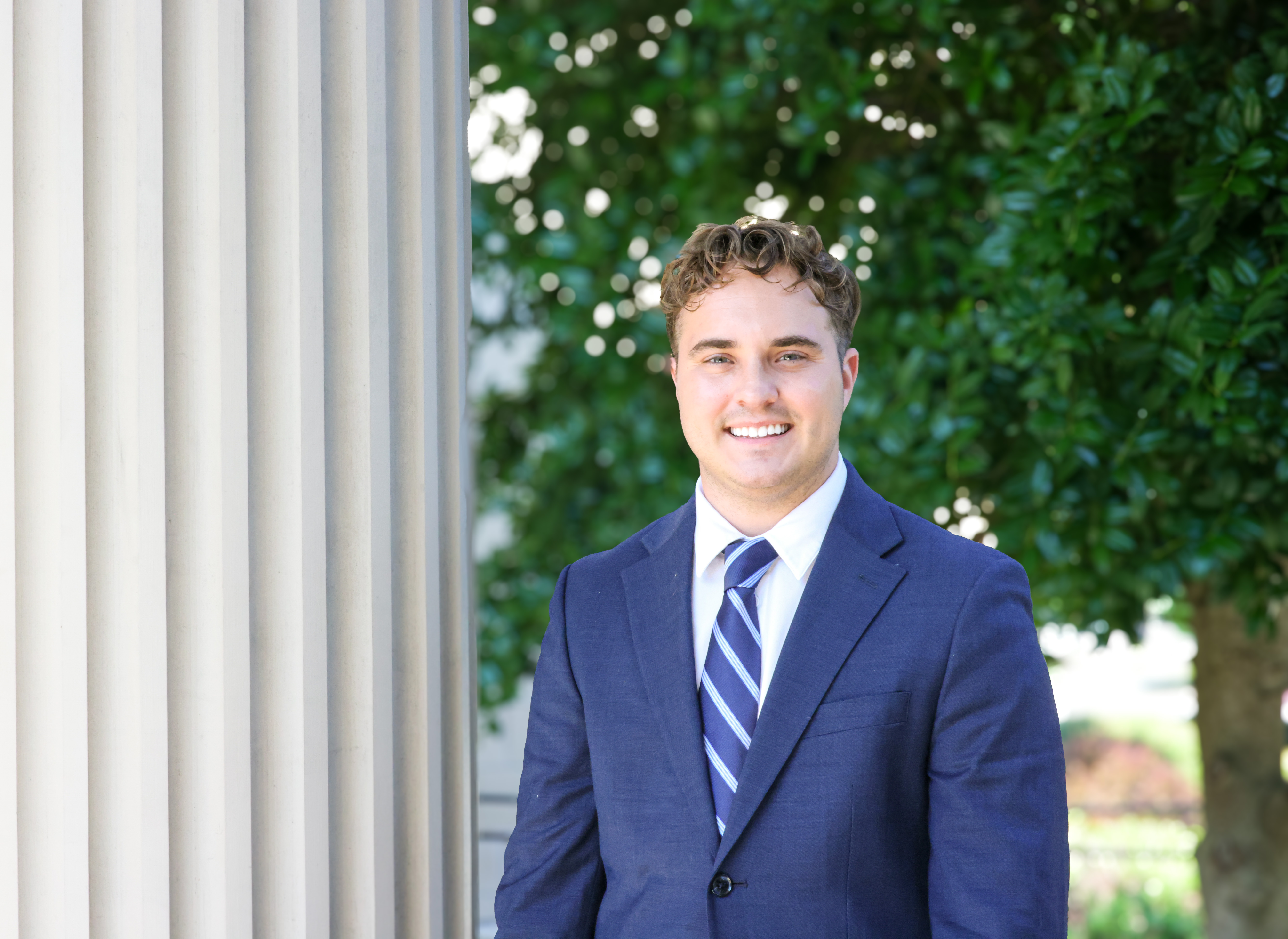
Lucas Lawrence has joined the UNC School of Government as the first fellow in a new initiative designed to strengthen the pipeline of attorneys entering local government law across North Carolina.
Lawrence will spend one year with the School, through August 2027, splitting his time between the School of Government and the Durham City Attorney's Office. Three days each week, he works alongside Durham's city attorneys, gaining hands-on experience with the legal issues counties and municipalities face every day. The other two days, he is at the School of Government, assisting faculty with research and writing projects. For now, that work centers primarily on community and economic development and questions of local government authority, with a mix of shorter-term research projects and longer-term writing assignments still taking shape.
“Local governments are subject to many more constraints than those imposed by the legal system; fiscal and political priorities must be navigated while still abiding by the intimidating legal scheme,” said Lawrence. “Being able to work with a local government to meet the needs of the community it serves was—and continues to be—the most appealing part of this fellowship.”
The fellowship addresses what the School has described as a growing challenge for the profession. Local government law is a specialized field that has to be learned, practiced, and passed from one generation of attorneys to the next. Yet relatively few law students are exposed to the field during law school. As experienced local government attorneys retire, the legal issues facing counties and municipalities grow more complex, and many communities, particularly smaller jurisdictions, struggle to recruit attorneys with the right experience.
To help address that gap, the School launched the Judith Wegner Law Fellowship, a one-year program built to introduce an early-career attorney to the practice of local government law. The fellowship is designed to give a new lawyer both day-to-day exposure to the legal issues local governments confront and the chance to dig into broader questions of local government law through research and writing.
Founding support for this initiative came from Brett and Sara Weed, whose $250,000 commitment over five years established the Brett and Sara Weed Judith Wegner Local Government Fellowship Fund. The fund honors the legacy of former UNC School of Law Dean Judith Wegner and her lifelong commitment to public service.
Selecting the first fellow involved a search that stretched across the state. The School advertised the position at every law school in North Carolina and followed its typical hiring process, ultimately interviewing four candidates in person before selecting Lawrence.
Overseeing Lawrence's experience is faculty member and local government finance expert Rebecca Badgett with assistance from municipal law expert Becca Fisher-Gabbard. "We are working to give him a mix of substantive research and writing opportunities that complement his practical experience with the Durham City Attorney's Office," said Badgett.
That pairing reflects the design School of Government founders Albert and Gladys Coates had when they encouraged the first faculty members to go out and “crawl through the bloodstream” of government—visit government offices, talk with public officials about their day-to-day work, and learn about their needs. This has become the foundation for how faculty members structure their work and their guiding principles for their teaching, research, advising, and writing.
The fellowship is meant to prepare a new attorney each year with both the practical experience and the deep understanding of local government law's legal frameworks that the field demands. School of Government leaders see it as a joint effort with the municipal and county attorney community across North Carolina. In remarks to municipal attorneys introducing the initiative, Dean Aimee Wall noted that, “Strong local government depends not only on good laws but on good lawyers prepared to guide communities wisely. This fellowship is one way we hope to help prepare the next generation of those lawyers.”
“The support the School of Government provides to local governments—from finance directors to elected officials—is remarkable because of how faculty make legal language accessible to non-legal audiences,” said Lawrence. “The sign of a truly talented teacher is someone who can bring audiences from all different backgrounds into the same conversation, and the School of Government is made up of such teachers on its faculty.”
Lawrence had sound career advice for law students considering their options. “Think about what felt compelling in law school and find out if that’s something you could do in the local government context, because it likely is! If your favorite classes in law school were contracts and art law, local governments frequently enter into contracts with local artists for installations. If the Fourth Amendment was your jam, you might be interested in working with local police departments. And even for folks who want to find a way to combine torts, real property, and a unique appreciation for all things spooky, public cemeteries are a thing that local government lawyers contend with.”
Published October 6, 2026