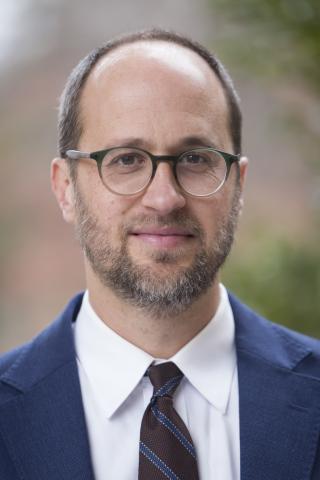
A five-year investigation by the New York Times has uncovered extensive evidence that famous civil-rights leader Cesar Chavez engaged in a pattern of sexually abusing young girls and women. Several survivors have come forward to tell their stories decades after the alleged abuse. Many say they did not come forward earlier out of concern for damaging the movement to advance the rights of farm workers and Latinos everywhere. As Chavez’s birthday of March 31 approaches, communities across the country are considering removing busts and statues, renaming “Cesar Chavez Day,” and changing the names of various streets and parks dedicated to him to center the movement rather than the man.
Hallucitations. A 17-year veteran of a U.S. Attorney’s Office in North Carolina resigned after it was discovered that he used AI to draft a brief and filed it notwithstanding its inaccurate citations. A sanctions hearing was held before a U.S. Magistrate Judge and the matter has been referred to the Department of Justice’s Office of Professional Responsibility. The attorney stated that he lost a prior draft of the brief and used AI to “catch up” as a deadline approached.
This AP article notes that a French researcher catalogued 490 examples of court filings containing “hallucinations” over a six-month period. As AI use becomes more and more prevalent, the concern about error-ridden briefs is growing. The article suggests tips such as thinking of AI as an assistant and always checking citations for accuracy.
Phil recently blogged about a Wisconsin case where an elected District Attorney was sanctioned for similar reasons. There, local rules required disclosure of the use of AI in drafting pleadings. In North Carolina, judges presiding in Cabarrus County Superior Court and the Western District of North Carolina have entered orders addressing the use of AI for various purposes. Meanwhile, this article in the LA times describes ways in which judges have started using AI to digest motions and draft rulings.
Subpoena quashed. Federal judge James Boasberg quashed a subpoena issued by attorneys from the Department of Justice seeking to investigate Federal Reserve Chair Jerome Powell. The judge concluded that the subpoenas were issued to pressure the Chair into either lowering interest rates or resigning and that scant evidence pointed to any criminal activity. The judge found a “mountain of evidence” of “improper purpose,” including President Trump’s public attacks on the Fed Chair. US Attorney for the District of Columbia, Jeanine Pirro, asserted that the decision to investigate the Chair was not influenced by politics, stressing that the grand jury would ultimately decide whether to bring charges.
Convicted, Commuted, and Recharged. A Florida man has been charged in state court in relation to a matter for which he previously received a presidential commutation. The man was charged in federal court with possession of a firearm and ammunition by a felon and possession of cocaine with the intent to distribute in October 2023. He was convicted and sentenced to 12 years in prison. However, after serving approximately two years, President Biden commuted his sentence, shortening his sentence without causing him to be released immediately. The man was released from prison last month. Four days later, he was arrested by state law enforcement officers in relation to the same incident. It is generally constitutional for an individual to be prosecuted by “separate sovereigns” under Gamble v. United States,587 U.S. 678 (2019). Commentators note that Steve Bannon was pardoned by President Trump and then prosecuted in New York State. Florida Attorney General James Uthmeier has announced his intention to review every “auto-penned commutation and pardon from the Biden administration that affects Florida.”
Clues underfoot? A New York Times article describes how investigators collected samples of moss and dirt to develop information in a case involving disinterment of graves at a Chicago cemetery. Investigators were attempting to establish a timeline as to when human remains were moved. They enlisted the help of experts in plant botany to examine the coloration of certain moss samples and opine on how long the moss would have remained green without sunlight. The investigation was recounted in an article published in the journal Forensic Science Research.
The article also discusses a case in Pennsylvania where experts analyzed moss growth to attempt to determine how long a skeleton had been in the woods. The field of forensic botany remains somewhat obscure, but experts note that 90 percent of the biomass on the planet is plant biomass and investigators could be missing out on valuable evidence.
Have a good weekend and see you next week.