As Managing Access to Clean Water Becomes More Complex, Falls Lake Offers Solutions
By Megan Doherty, Project Analyst, SOG Environmental Finance Center
Abundant natural resources, especially water, are often taken for granted. However, increasing pollution is making clean water more expensive to produce. The crucial questions now are: How do we maintain water affordability? And who should bear the cost – users or polluters?
Falls Lake in North Carolina is one of many waterbodies grappling with these challenges. A man-made reservoir supplying drinking water to half a million people, Falls Lake is part of the Upper Neuse River Basin (UNRB). When concerns about water quality emerged, the North Carolina legislature established a Nutrient Management Strategy, requiring municipalities to take action to reduce nutrient pollution. In 2016, the NC General Assembly funded a six-year nutrient management study, later extended to seven years, led by the NC Collaboratory. The study brought together multiple research teams—including the School of Government Environmental Finance Center—to explore strategies for managing nutrient pollution.
While the legislature supported research into improving water quality, it did not fund the implementation of recommended projects. This is where the SOG EFC’s research played a key role. From 2016 to 2019, the SOG EFC studied Jordan Lake, and from 2020 to 2023, it focused on Falls Lake, evaluating financial strategies to support effective and sustainable water quality improvements.
The center had three main goals:
- Uncover the current and future financing strategies for nutrient management projects.
- Determine the most financially feasible funding strategy for the constituents of Falls Lake.
- Determine if nutrient management funding strategies are transferable between watersheds.
EFC Findings from Years 1 Through 4
In the first year of the study, the SOG EFC developed a strong understanding of the current financial requirements of the Falls Lake Rules. Through stakeholder interviews, the SOG EFC identified the existing revenue streams used to finance rule compliance and summarized the engagement of nutrient management organizations to understand the potential for multi-jurisdictional compliance. Several jurisdictions, such as the Granville-Person Stormwater Service and the Upper Neuse River Basin Association (UNBRA), had already engaged in multi-jurisdictional compliance.
In the second year of the study, the SOG EFC continued researching the current and potential financial streams to fund rule compliance and completed repurposing the Jordan Lake Revenueshed tool into the Falls Lake Revenueshed tool. A Revenueshed is an area where base funds can be raised to finance a specific purpose. Base funding can include utility fees and property taxes. In the case of Falls Lake, water, sewer, stormwater, and property taxes can be pooled to fund projects contributing to compliance under the Nutrient Management Rules.
The center detailed several nutrient management funding strategies outside of North Carolina, including the Maryland Bay Restoration Fund, which raises money through license plate fees and taxes. By completing the Revenusehed tool, the SOG EFC allowed for easy cross-jurisdictional collaboration to finance nutrient management.
The tool displays:
- How to use incremental fee increases to raise funds across a watershed.
- How small changes in fees can raise significant funds.
- How these small fee changes have minimal financial impacts on low-income customers.
The example below models how an increase in water utility fees by $0.05 per 1,000 gallons across the UNRB could raise $10,000 annually. Additionally, this change would only increase bills for the lower 20th percentile income households by 0.02%(Figure 1).
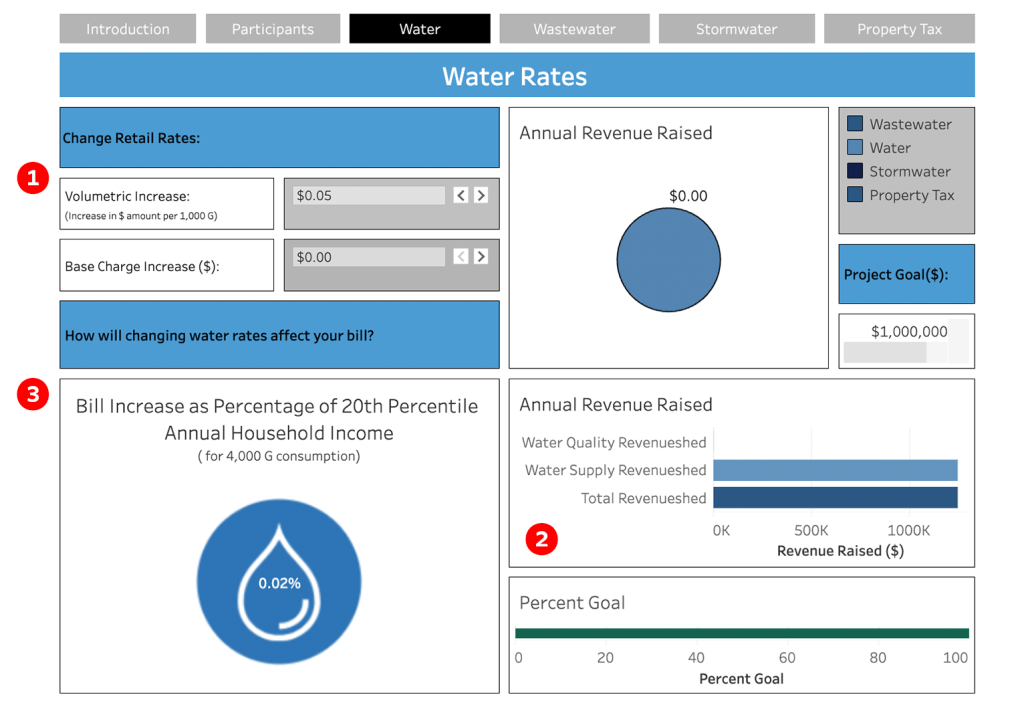
Figure 1: A screenshot of the revenueshed tool
In year three, the EFC analyzed the affordability of current financing mechanisms in Falls Lake, provided recommendations to mitigate affordability concerns, and shared the positive impacts of the Interim Alternative Implementation Approach’s (IAIA) new financial compliance structure. After finding existing affordability concerns with water bills, the EFC recommended employing two metrics, the AR20 and the Percent of 20th Percentile Annual Household Income. Additionally, the EFC outlined government funding for communities that could simultaneously aid nutrient management. These funds include the Infrastructure Investment and Jobs Act (IIJA). It was found that the IAIA’s new compliance structure would also decrease affordability concerns, offering municipalities more flexibility with nutrient reduction projects.
In the final year of the study, the SOG EFC expanded and synthesized its previous research. First, the SOG EFC summarized the obligations of Falls Lake under the Clean Water Act (CWA) and revealed the unclear impacts of a site-specific standard on current legislation. Second, the center compared recommendations from the Jordan Lake and the Falls Lake nutrient studies finding that many recommendations were transferable between the two watersheds. Lastly, the financial implications of the longevity and number of funders contributing to nutrient management in Falls Lake were discussed alongside several legislative recommendations revealing that long-term and constant funding are pivotal to maintaining nutrient management practices. The SOG EFC compiled the studies findings into a final report, summarizing all four years of research with the goal of educating readers on the financial and political intricacies of Falls Lake nutrient management.
National Impact
The study of Falls Lake is a scientific and financial success for constituents of the UNRB and waterbodies across the nation. With increasing droughts, flooding, chemical impurities, and overall unpredictability with water resources, advanced study and treatment of water will be necessary, and financing these two sectors will be pivotal. The model of deep collaboration, scientific innovation, and financial analysis created in the Nutrient Management study lays a strong foundation for mitigating the nation’s impending water needs issues.
Reports
The Falls Lake Nutrient Study Full Report and the Falls Lake Nutrient Study Summary Report are both available on the Falls Lake Research Website.
Special Thanks
The findings from this report would only be possible with funding from the NC Collaboratory. The SOG EFC is grateful to have had this opportunity to collaborate.
Need technical assistance? The SOG Environmental Finance Center is here to help!
The School of Government Environmental Finance Center offers free one-on-one technical assistance for small water systems. If you are interested in our support, fill out our Technical Assistance Request Form or contact us at efc@sog.unc.edu.