
Tar Heel Bus Tour: Listening, Learning, and Leading Across North Carolina
As the sun rose on May 12, 2026, two buses pulled away from UNC-Chapel Hill in opposite directions—one headed east, the other west—launching the annual Tar Heel Bus Tour. Before their departure, Chancellor Lee H. Roberts gathered with nearly 80 faculty and staff to send them off on a three-day journey of listening, learning, and connection across North Carolina.
For nearly three decades, the Tar Heel Bus Tour has offered faculty and staff a unique opportunity to experience the University’s public service mission beyond campus.Established in 1997 under the leadership of former Chancellor Michael Hooker, the tour was created to deepen connections between the University and the people of North Carolina. Through visits with community organizations, public officials, educators, and residents, participants gain a richer understanding of the challenges and opportunities facing communities across the state while building relationships with colleagues from across campus.
Since 2003, Lynn Blanchard, director of the Carolina Center for Public Service, has coordinated the Tar Heel Bus Tour, helping shape it into one of the University's signature professional development experiences. Blanchard said the tour provides faculty and staff with a rare opportunity to "step away from their day-to-day responsibilities and spend time listening, observing, and learning alongside colleagues from across campus." Those shared experiences often spark new ideas, strengthen relationships across the University, and encourage participants to reflect on how they can apply what they learn to their teaching, research, and service.
The School of Government has long been connected to the tour’s history. Former Dean Mike Smith participated in early planning discussions that helped bring the program to life, and Dean Aimee Wall has continued the School'stradition of longstanding involvement. This year marked her fourth tour. “The work happening across our state is remarkable,” Wall said. “Seeing it firsthand and learning from local communities continues to shape how we think about our work at the School.”
Across both routes, this year’s tour included 25 stops in communities throughout North Carolina, offering participants a close look at local initiatives and the people leading them.
A tour of the Duke Street Cottages project in Granite Falls gave participants a firsthand look at one approach to expanding affordable housing in western North Carolina. The modular, energy-efficient development served as the backdrop for conversations with local leaders — experts in their own communities — about the region's housing challenges and the collaborative work underway to address them. Coordinated by Michael Welker, director of policy and research partnerships for ncIMPACT, the stop underscored the value of learning directly from those leading local solutions.
“There are many brilliant people doing important work at Carolina, but it expands our perspective to hear firsthand from local leaders about how they experience and respond to issues,” Welker said. “The community members that we partner with through Carolina Across 100 are experts in their own right.”
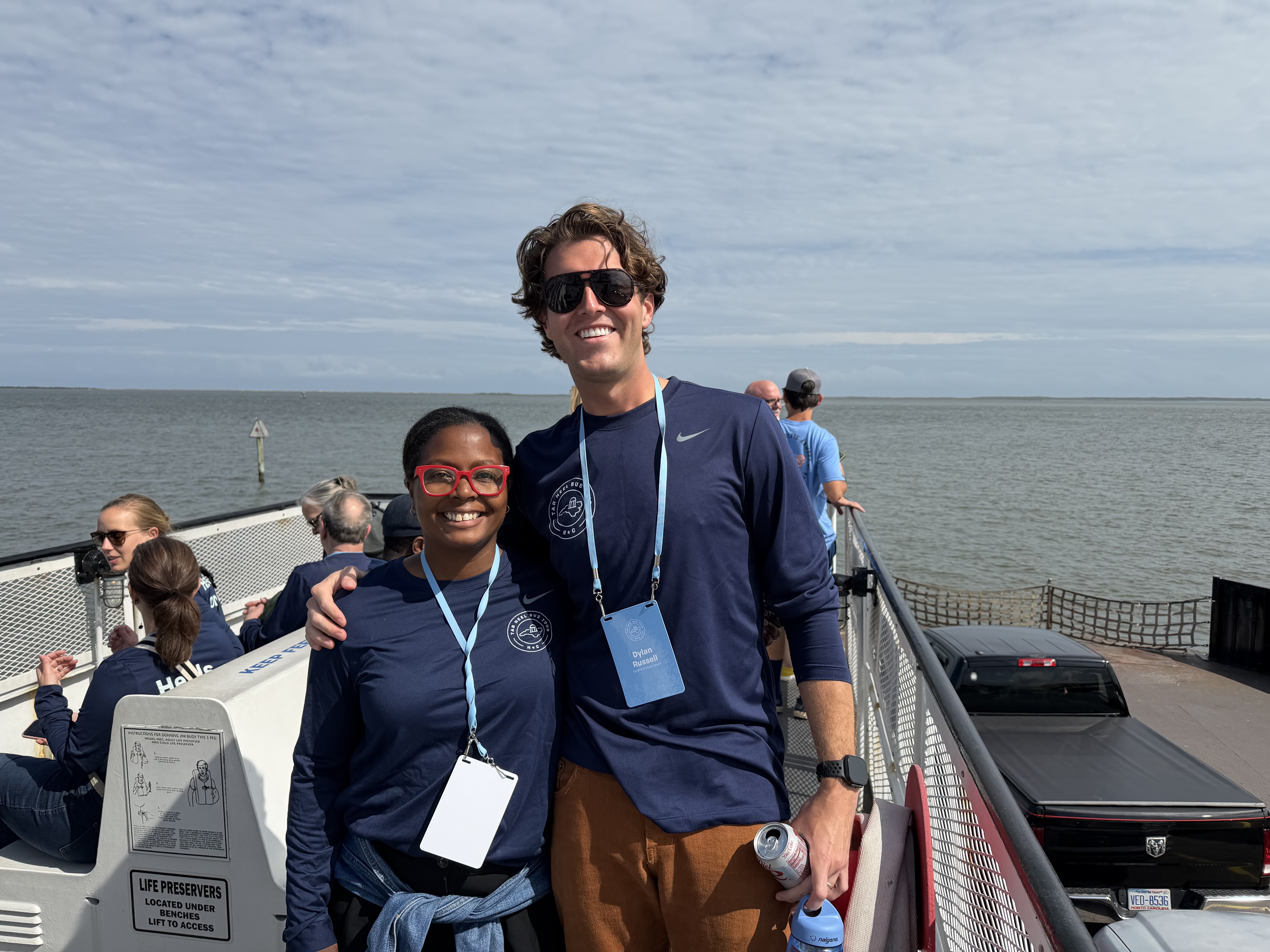
For School faculty member Dylan Russell, who participated in the East Bus tour, the experience offered a clearer view of the University’s role as “the people’s university.”
One of Russell’s most memorable stops was the Weymouth Center, where participants met several Carolina authors, including Kathleen DuVal, whose book Native Nations recently received the Pulitzer Prize. DuVal provided historical context on the bus ahead of the group's visit with the Lumbee community, which was preparing for a celebration marking its recognition as the 575th federally recognized tribe.
“Feeling the immense pride of the Lumbee community in that moment, with historical context from one of UNC’s own award-winning professors, was incredible,” Russell shared. “The experience underscored the distinctiveness of North Carolina communities and the importance of faculty and staff engaging directly with them.”
By the end of the tour, the east and west routes offered participants a shared view of how communities across North Carolina are responding to complex, place-based challenges. The experience highlighted how the School of Government and UNC-Chapel Hill’s broader public service mission are shaped by sustained engagement with local leaders and communities across the state.