Community Engagement Toolkit
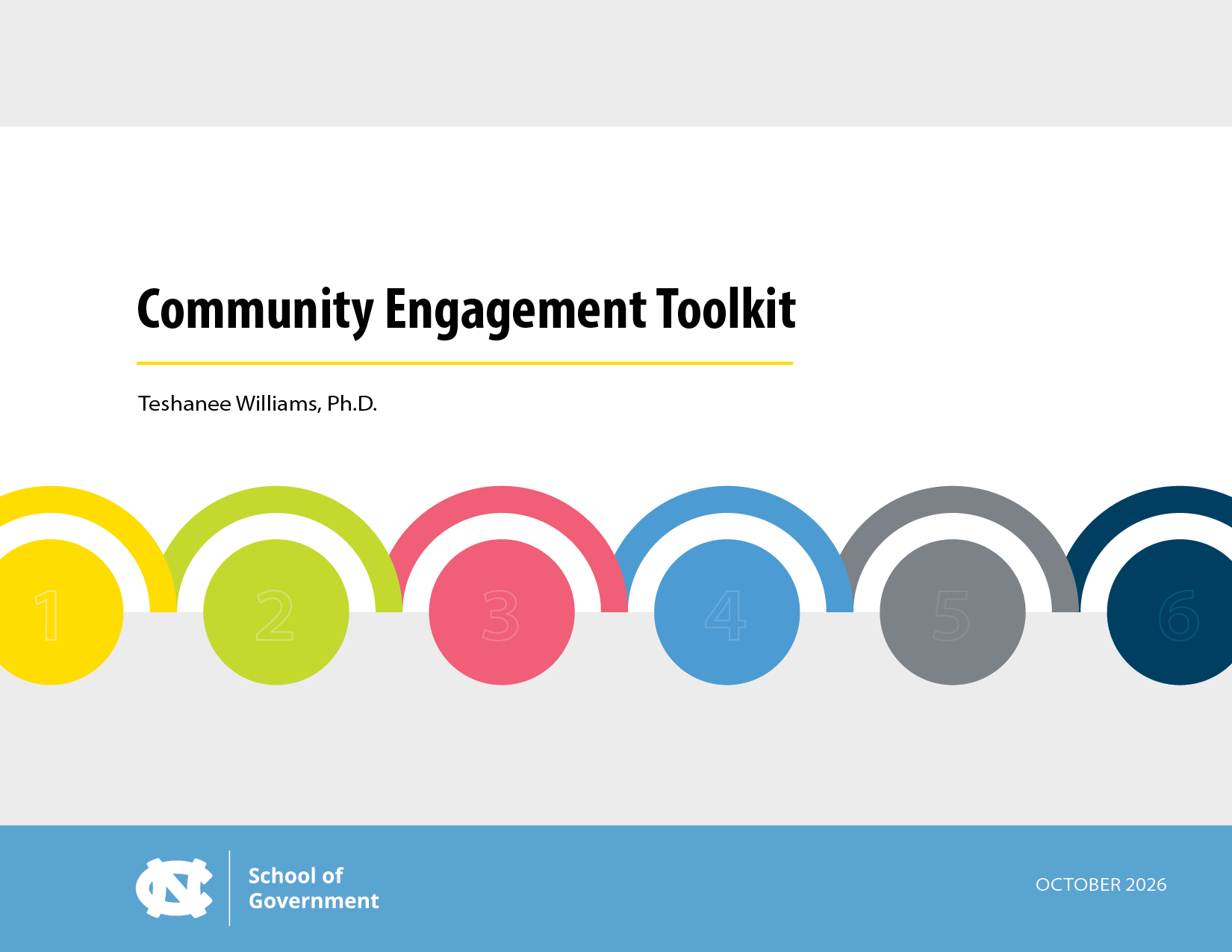
The toolkit serves as a guide for developing an action plan for community engagement projects.
The goal of a community engagement action plan is to leverage existing structures, expertise, and relationships in the community and in local government to improve several community-identified issues with respect to government-community communication, police, and public transportation. Each step in the plan provides questions and frameworks that can be used for reflection. Each step should be completed with input from stakeholders in your community.
Step 1: Decide — Why Do You Need to Engage Your Community?
Clarify why engagement is needed and how community input can strengthen problem framing, decision-making, local knowledge, and community ownership.
Step 2: Compare — What Type of Community Engagement Do You Need?
Determine the appropriate type and level of engagement based on the purpose of the effort and the desired level of community input, influence, and involvement.
Step 3: Analyze — Who to Engage
Identify who is affected, who has influence, who is already engaged or disengaged, and whose voices need greater inclusion in the process.
Step 4: Choose — Which Engagement Strategies Work for Your Community?
Select engagement strategies that fit your community and frame issues in ways that encourage constructive and inclusive dialogue.
Step 5: Envision — What Does Success Look Like for the Community?
Define clear goals and measurable indicators that show what successful community engagement should accomplish.
Step 6: Plan — Develop an Action Plan, Implement It, and Evaluate It with the Community
Translate your goals into specific strategies, timelines, partners, resources, and feedback loops for implementation and evaluation.