
Building the Workforce Local Governments Need: A.R. El-Khattabi on Teaching the Next Generation of Urban Planners at UNC-Chapel Hill
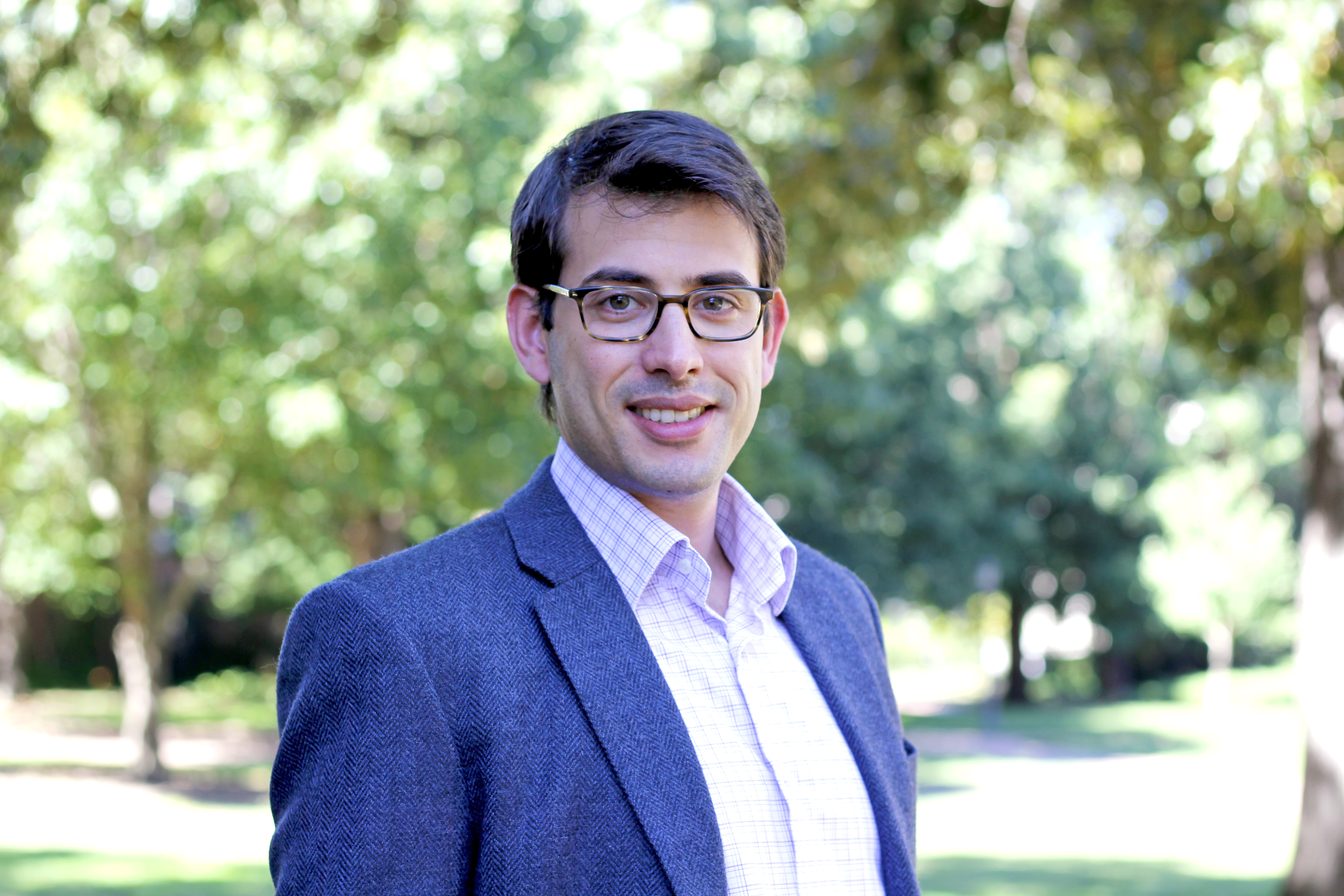
Across North Carolina, local governments are being asked to make increasingly complex decisions about housing, transportation, infrastructure, and economic development—often while facing limited staff capacity and constrained resources. Meeting those challenges requires professionals who can turn data into action and help communities plan for an uncertain future.
For Ahmed Rachid (A.R.) El-Khattabi, Environmental Finance Center Research Director at the UNC School of Government, preparing that next generation of professionals begins in the classroom.
Though he’s based at the School of Government, El-Khattabi teaches in UNC-Chapel Hill's Urban Studies and Planning undergraduate minor, which is part of the College of Arts and Sciences City and Regional Planning department. As an instructor, he helps students understand how cities and communities function—and, more importantly, how thoughtful planning can improve the places where people live, work, and thrive.
Most residents experience the outcomes of local government decisions every day without ever seeing the processes behind them. The neighborhoods they live in, the roads they travel, the parks they enjoy, and the businesses they patronize are all shaped by decisions about land use, transportation, public investment, and long-term growth.
"Most people lack an awareness of how local governments work," El-Khattabi said. "Planning plays a really important role in bringing information from different disciplines together and informing how decisions are made."
That interdisciplinary perspective is at the heart of city and regional planning. The profession draws on economics, public policy, environmental science, geography, data analysis, and community engagement to address complex challenges facing communities. Planners evaluate alternative futures, guide development, improve transportation systems, support economic growth, protect natural resources, and help communities balance competing priorities.
Those skills are becoming increasingly important across North Carolina. While some communities are managing rapid population growth and rising development pressures, others are working to address economic disinvestment, aging infrastructure, and housing affordability concerns. The planners entering the workforce today will play a key role in helping communities navigate those realities in the decades ahead.
El-Khattabi brings both academic expertise and practical experience to that mission. After earning his Ph.D. in City and Regional Planning from UNC-Chapel Hill in 2020, he spent several years working at the intersection of research and practice before joining the School of Government in 2023. For the School's Environmental Finance Center, he works directly with local governments to develop data dashboards, financial sustainability tools, and decision-support systems that help communities make informed choices. That connection to real-world practice shapes his teaching.
In the Urban Studies and Planning minor, El-Khattabi teaches Introduction to Urban Analytics, a course designed to reflect the growing role of data in public decision-making. Students learn how data is collected, managed, analyzed, and translated into actionable recommendations for local governments and planning organizations.
Rather than simply learning concepts in theory, students work directly with real-world datasets and planning challenges. Through hands-on assignments, they analyze information, develop evidence-based interpretations, and connect their findings to policy questions facing communities today.
"We really focus on the data governments can use to make administrative planning decisions," El-Khattabi said. "We touch on how it relates to transportation and health and other aspects of urban planning."
The experience gives students exposure to the same types of analytical tools and decision-making frameworks used by local governments every day. It also helps them understand an increasingly important reality of public service: data alone does not solve problems. Effective public decision-making requires the ability to interpret information, communicate findings, and connect analysis to community needs.
As local governments increasingly rely on data to guide everything from infrastructure investments to housing policy, El-Khattabi believes future planners must be prepared to navigate that shift thoughtfully and responsibly.
"The world is moving more and more toward data-based decision-making," he said. "Local governments are looking for ways to leverage the data they have. The class gives students hands-on experience connecting data with real-world decisions."
That focus on connecting research, data, and practice reflects a broader mission of the School of Government. By bridging academic knowledge with practical experience, faculty members help students understand not only how local governments operate, but how they can become effective partners in building stronger communities. For North Carolina's cities, towns, and counties, that investment in future public servants may be as important as any planning tool or dataset.
Published June 24, 2026