
Insights from the 2023 North Carolina Stormwater Utilities Report
By the SOG Environmental Finance Center
Introduction
The SOG Environmental Finance Center, in collaboration with the North Carolina Division of Water Infrastructure, recently conducted a comprehensive survey of stormwater utilities in North Carolina for fiscal year 2024. This survey included data on 101 stormwater utilities, encompassing various fee structures, serving both municipalities and counties. The findings from this report shed light on how stormwater fees are structured in North Carolina and highlight trends in fee changes, along with supplementary information about the utilities’ populations served, NPDES permitting, year of creation, and billing methods.
Stormwater Fee Structures
North Carolina stormwater utilities employ various fee structures. These fee structures implemented by NC stormwater utilities are typically adopted depending on the type of property being assessed.
- Flat Fees: For residential customers, flat fee structures are predominant. These fees are uniform, regardless of the property’s impervious surface. This approach simplifies billing and reduces administrative costs. In Figure 1, you can see the difference in the number of residential and nonresidential flat fees. Typically, Nonresidential properties are larger than Residential, so billing at a flat rate doesn’t always make sense.
- Tiered Flat Fees: Tiered flat fees are more common for single-family residential properties, with different tiers based on the amount of impervious surface. This helps to compensate for residential properties that vary significantly in size. However, it is interesting to note that Tiered Flat Fees are the least common fees seen on nonresidential properties.
- Per Equivalent Residential Unit (ERU): For nonresidential properties, charging per ERU is the preferred method. This fee structure ensures proportional billing based on the impervious surface within a parcel. Looking at Figure 1, you can see that this is the least common billing method for residential customers. The reason for that is because an ERU is typically the average impervious area of a single-family residential parcel, so if a utility were to choose this fee structure, it would be adjacent to enacting a flat fee.
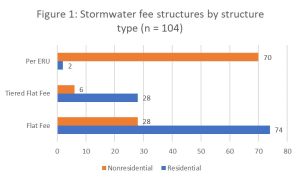
Figure 1: Stormwater Fee Structures by Type
Monthly Billing
The report further explores the monthly billing trends for different types of properties:
- Residential Monthly Bills: Residential stormwater fees are mostly flat, with the median monthly bill at $5.00 for 3,000 and 6,000 square feet of impervious surface.
- Multi-family Monthly Bills: Multi-family properties have varied fees, with the median bill at $13.23 for four units and $30.00 for ten units.
- Nonresidential Monthly Bills: Nonresidential properties show a wide range of fees, with a median bill of $15.61 at 10,000 square feet of impervious surface and $76.07 at 50,000 square feet.
These billing trends are to be expected. Residential customers have less impervious surface area, so will be billed less, while multifamily and nonresidential customers have much more varied fees due to inconsistency in impervious surface area.
Trends in Fee Changes
Between fiscal year 2022 and 2024, approximately 30% of the surveyed utilities raised stormwater fees, indicating active evaluation of funding needs. Notably, residential fee increases ranged from $0.08 to $14.43, while commercial and multi-family units also saw fewer variable fee adjustments.
Supplementary Utility Information
The report offers insights into the populations served, NPDES permitting, year of utility creation, and billing methods.
- Population Served: Most North Carolina stormwater utilities serve populations under 50,000, but some larger municipalities serve populations exceeding 100,000.
- NPDES Permitting: Municipal Separate Storm Sewer System (MS4) permits, both Phase I and Phase II, play a significant role in regulatory requirements, and all but 22 utilities have an MS4 permit. The need for an MS4 permit can be influenced by jurisdictional factors, the nature of the stormwater management activities, and regulatory frameworks in place, and doesn’t correlate with the price of stormwater fees.
- Year of Utility Creation: While many utilities were established in the 2000s and 2010s, there is a continuing need for dedicated funding sources for stormwater spending in other local governments.
- Billing Methods: Stormwater utilities use various billing methods, most charging customers through combined utility bills. Stand-alone billing and property tax billing are also employed, depending on local circumstances.
Need technical assistance? The SOG Environmental Finance Center is here to help!
The School of Government Environmental Finance Center offers free one-on-one technical assistance for small water systems. If you are interested in our support, fill out our Technical Assistance Request Form or contact us at efc@sog.unc.edu.